
6:30 pm - 9:00 pm
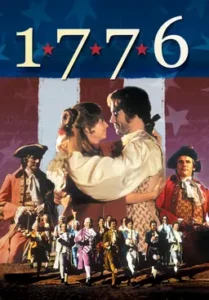 1776 is a 1972 American historical musical drama film directed by Peter H. Hunt and written by Peter Stone, based on his book for the 1969 Broadway musical of the same name, with music and lyrics by Sherman Edwards. Set in Philadelphia in the summer of 1776, it is a fictionalized account of the events leading up to the signing of the Declaration of Independence. The film stars William Daniels, Howard da Silva, Donald Madden, John Cullum, Ken Howard and Blythe Danner.
Portions of dialogue and some lyrics were taken directly from the letters and memoirs of the actual participants of the Second Continental Congress.
Plot
John Adams, representing Massachusetts in the Second Continental Congress in Philadelphia, laments the body's refusal to debate his motion to declare the colonies' independence from Great Britain and instead to discuss more trivial matters. Disliked by most of his fellow Congressmen, he frequently seeks advice and comfort from his wife, Abigail. Benjamin Franklin of Pennsylvania, one of the few who enjoys Adams' company due mainly to their shared dream of independence, suggests someone else propose the independence resolution. They get Richard Henry Lee of Virginia to agree and he rides home to get authorization from the state legislature to do so.
Lee returns, proposes the resolution and, over the objections of John Dickinson of Pennsylvania, leader of the Conservative faction seeking reconciliation with Britain, Congress agrees to debate the question, which becomes heated as tempers flare. Caesar Rodney of Delaware, suffering from cancer, collapses and is forced to leave during the debate, depriving Adams of Delaware's vote. A new delegation from New Jersey arrives and votes in favor of independence (Franklin receives word that his son William, the Royal Governor of New Jersey, has been arrested). Seeking to kill the motion, Dickinson successfully moves that an independence vote be unanimous on the grounds that "no colony be torn away from its mother country without its own consent." To salvage the motion, Adams asks for a postponement to draft a declaration of grievances. President of the Congress, John Hancock, breaks the tie vote in favor of a declaration and appoints Adams, Franklin, Roger Sherman of Connecticut, Robert Livingston of New York, and Thomas Jefferson of Virginia to a committee to write it. Despite his determination to go home to his wife, Martha, Jefferson reluctantly agrees to be the primary writer. After a full week passes without Jefferson's being able to complete the task, Adams summons Martha to Philadelphia; Martha charms both Adams and Franklin, and Jefferson finishes the draft.
To convince Samuel Chase of Maryland to support independence, Adams agrees to accept General George Washington's plea to visit the army encampment in New Brunswick, New Jersey, taking Franklin and Chase with him. After the members return to their lodgings, a young military courier arrives and sadly relates to Congressional custodian Andrew McNair how his two best friends were killed in battle at Lexington.
After Adams and Franklin return from New Jersey, the Declaration is read to the full Congress, which begins accepting many amendments. Jefferson agrees to almost all of the changes, except striking language referring to King George as a "tyrant" and objecting to slavery. Edward Rutledge of South Carolina leads the Southern members in walking out in protest just as Chase returns with Maryland's vote supporting independence. Frustrated at Adams's refusal to compromise, Franklin tells him that to achieve the primary goal of independence Adams must accept that those with opinions contrary to his will be part of their new nation. Badly shaken, Adams again seeks counsel from Abigail, and thanks to a delivery of much-needed saltpeter from her and the delegate from Georgia's sudden decision to support independence, Adams finds the strength and will to continue.
On the day of the vote (July 2, 1776), Adams and Jefferson agree to drop the slavery provision, and Rutledge and the other Southern states vote for independence. With Delaware divided, Rodney is brought back to support independence by majority vote of its three representatives. Eventually, all states vote for independence except divided Pennsylvania and New York, whose remaining representative, Lewis Morris, has abstained throughout the proceedings. When Dickinson rises to vote against the proposal, Franklin moves that the Pennsylvania delegation be polled: he votes for independence and Dickinson votes against it, leaving the question up to James Wilson. Not wanting to be remembered for casting the decisive vote against American independence, Wilson votes in favor. Dickinson resigns from Congress and vows to join the army to support the fight against the British, even though he believes it to be futile.
As the members prepare to sign the Declaration of Independence on July 4, 1776, Morris receives word that his estates have been destroyed and his family moved to safety. Despite not being authorized, Morris signs anyway. As McNair tolls the building's bell, one member per state signs, establishing the United States of America.
Doors open @ 6:00pm | Film @ 6:30 pm | Free to the Community | Concession items $1